.png)
Every October 31, Santa Monica Boulevard transforms.
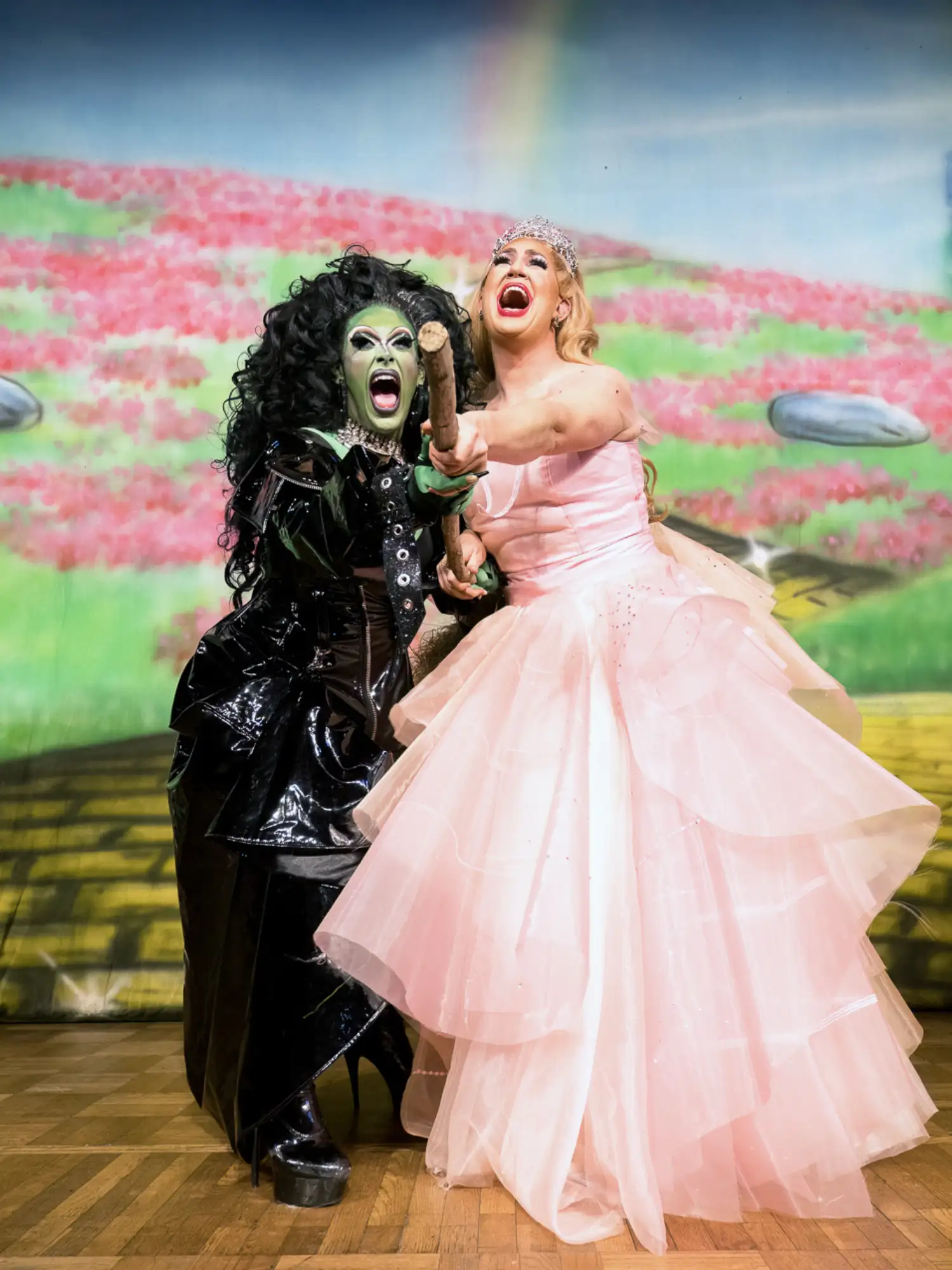
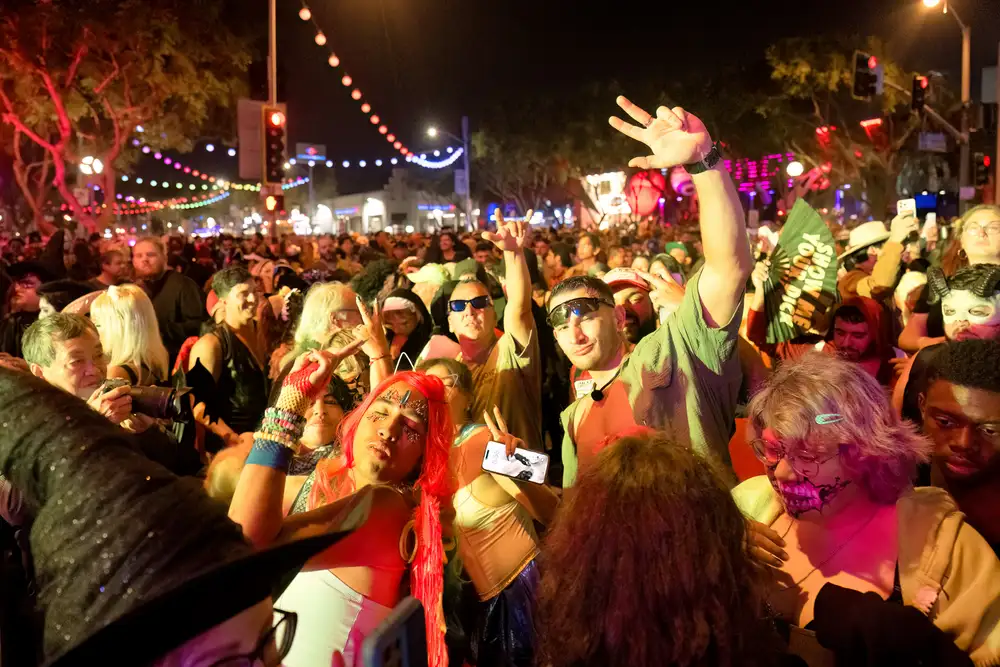
Costumes become more elaborate. Wigs get taller. Heels get higher. And, on Halloween night, the Boulevard itself becomes a stage as thousands of revelers descend on West Hollywood for one of the City of West Hollywood’s most iconic traditions: Halloween Carnaval.
The event’s official history generally begins with a simple sentence: “West Hollywood Halloween Carnaval was launched in 1987.”
That’s true, of course. But there’s more to the story. Because Halloween in West Hollywood wasn’t really invented by City government. It was initiated first by the community.
Before West Hollywood Was a City
Years before the City of West Hollywood was incorporated in 1984, Halloween had become a particularly important night for the LGBTQ+ community on and around Santa Monica Boulevard. LGBTQ+ bars and clubs held costume parties and contests, drag performers turned Halloween into an opportunity for spectacular transformation and, as the night evolved into early morning, the festivities would spill out of the clubs and onto sidewalks.
Halloween celebrations grew organically, without an official organizing group, City-produced stage, or carefully planned street activation.
One of the most important early gathering places for Halloween was Studio One, the legendary club on N. La Peer Drive. Studio One opened in 1974 and quickly became one of the most famous “gay discos” in the nation. Its Halloween parties began that same year and, year by year, grew into enormous productions. By 1977, more than 2,000 guests reportedly attended a celebration at Studio One that included a massive circus tent, performers, elaborate costumes, and contests with cash prizes.
The festivities became so large that crowds spilled into surrounding parking lots, N. La Peer Drive, N. Robertson Boulevard, portions of Santa Monica Boulevard, and nearby West Hollywood Park. In other words, years before there was a City of West Hollywood, there was already a West Hollywood Halloween of sorts.
The Celebrations Move Into the Street
By the early 1980s, Halloween celebrations had become something bigger than any one nightclub. People came to West Hollywood specifically to see and be seen in costumes. Revelers moved between bars and clubs. Crowds gathered outside venues, and Santa Monica Boulevard became part of the celebrations themselves.
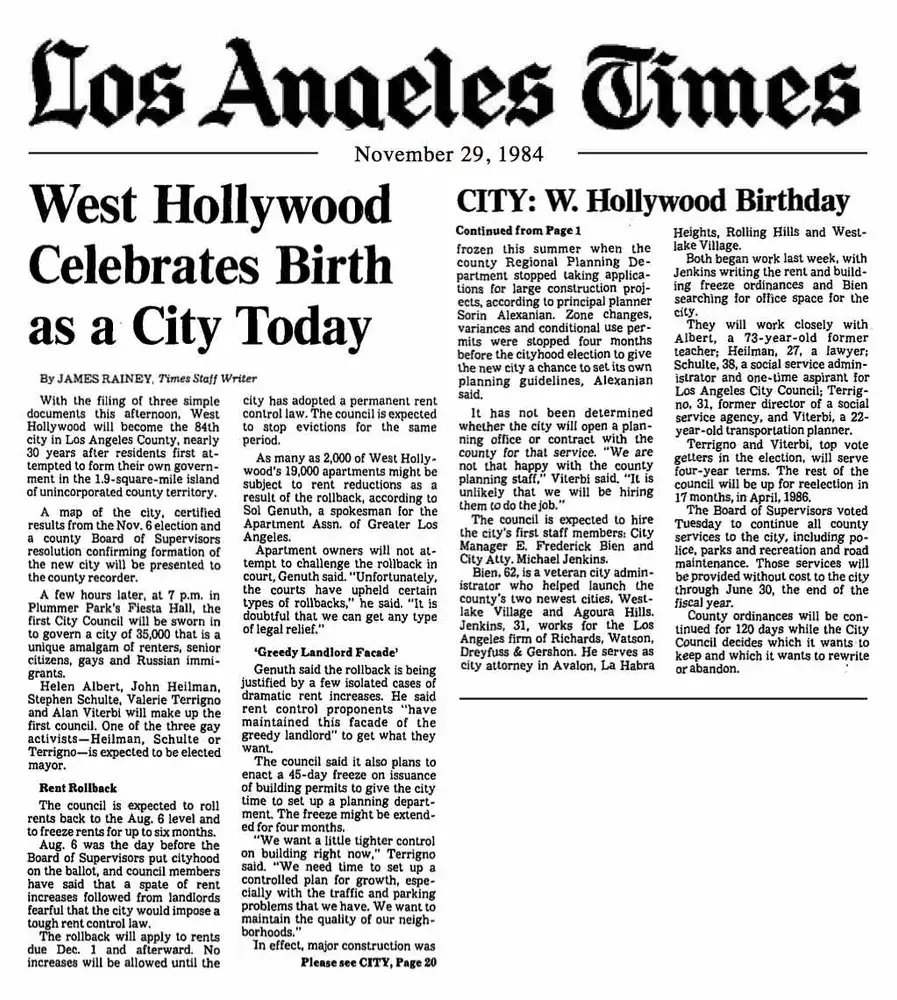
And then something important happened. On November 29, 1984, West Hollywood officially became a city. The new municipal government enthusiastically embraced the community’s Halloween tradition and expanded its possibilities.
In 1987, the City of West Hollywood officially launched its Halloween festivity. According to the West Hollywood Post (Nov. 5, 1987): “The rain didn’t discourage the Pope. He was there. And Judge Bork showed up, along with Pee Wee Herman. Tammy Faye Bakker braved the wet despite her mascara. The scene was Santa Monica Boulevard on Saturday night. West Hollywood may be the only city in America where Halloween is a bigger deal than Christmas.”
Perhaps the better way to think about 1987 isn’t as the year Halloween began in West Hollywood. Instead, it’s the year an existing community tradition began its evolution into an official City celebration.
From Organic Gathering to City Tradition
By 1988, the scale of the celebration was already remarkable. The Los Angeles Times reported that more than 15,000 people were expected for Halloween festivities in West Hollywood that year. The Times described an “informal street party,” with City officials planning to close Santa Monica Boulevard between Almont Drive and N. La Cienega Boulevard from 8 p.m. until 4 a.m. to accommodate the crowds. That tells us something important about Halloween’s evolution.
By 1992, an estimated 60,000 people were coming to West Hollywood for Halloween. At that point, City officials concluded that simply closing Santa Monica Boulevard wasn’t enough. The City hired a professional producer and added a main stage.
Over the years, stages, entertainment, vendors, traffic plans, security measures, emergency operations, and increasingly sophisticated event infrastructure followed.
But the costumes — and the people wearing them — have remained the real attraction. The City’s official Flickr account has multiple photo albums documenting past Halloween Carnaval events. Here’s just one album from the 2025 celebration with photos by City photographer Jon Viscott.
A Celebration Rooted in LGBTQ+ West Hollywood
There’s another piece of history worth remembering.
Halloween offered LGBTQ+ people something particularly powerful during an era when living openly could carry enormous negative social and professional consequences. In West Hollywood — on Halloween — costume, drag, gender play, and transformation could be celebrated rather than hidden. For one night, being outrageous wasn’t merely permitted; it was embraced.
By 1995, the Los Angeles Times was describing Halloween in West Hollywood as an event that had begun as a gay and lesbian celebration before exploding in popularity among a much broader audience.
By the end of the 1990s, both West Hollywood and San Francisco’s Castro District were attracting enormous Halloween crowds to celebrations that had grown from LGBTQ+ community traditions into vibrant public events.
Today, as in Yesterday: An Embrace of the Community’s Creativity and Joy
Today, producing Halloween Carnaval is a sophisticated endeavor. The City’s Event Services Division leads interdepartmental and interagency planning and coordination for an annual celebration that includes public safety, emergency operations, transportation changes, street closures, parking, communications, facilities and field services, sanitation, business activations, and numerous other logistical functions.
The resulting work transforms a mile-long stretch of Santa Monica Boulevard on Halloween night each year into a pedestrian-oriented celebration where costumed revelers dance, celebrate, and embrace the community’s creativity and joy. And, by November 1, it all transforms back again into a lively neighborhood district.
Halloween Carnaval has evolved quite a bit over the years from the early days of costumed bar crawls. But the heart of Halloween remains much the same: what drew crowds to Studio One in the 1970s nearly half a century ago remains true today: extraordinary costumes, outstanding creativity, glittery spectacle, limitless freedom, a deep embrace of LGBTQ+ culture, and the simple joy of showing up and showing off. All driven by the remarkable community members that make West Hollywood like no other city in the world.
Halloween Carnaval 2026 will take place in West Hollywood on Saturday, October 31, 2026. For details, visit www.weho.org/halloween, or text "🎃" to (323) 848-5000 for updates.
.jpg)
.webp)
.webp)
.webp)
.webp)
.webp)
.webp)
.webp)
.webp)
.webp)
.webp)
.webp)
.webp)
.webp)
.webp)
.webp)
.webp)
.webp)
.webp)
.webp)


.webp)
.webp)
.webp)
.webp)
.webp)
.webp)
.webp)
.webp)
.webp)

.png)
.webp)
.webp)
.png)
.webp)
.webp)
.webp)
.webp)
.webp)
.webp)
.webp)
.jpg)
.webp)
.webp)
.webp)


.webp)
.webp)
%20(1).webp)

.webp)
.webp)

.webp)
.webp)
.png)
.webp)